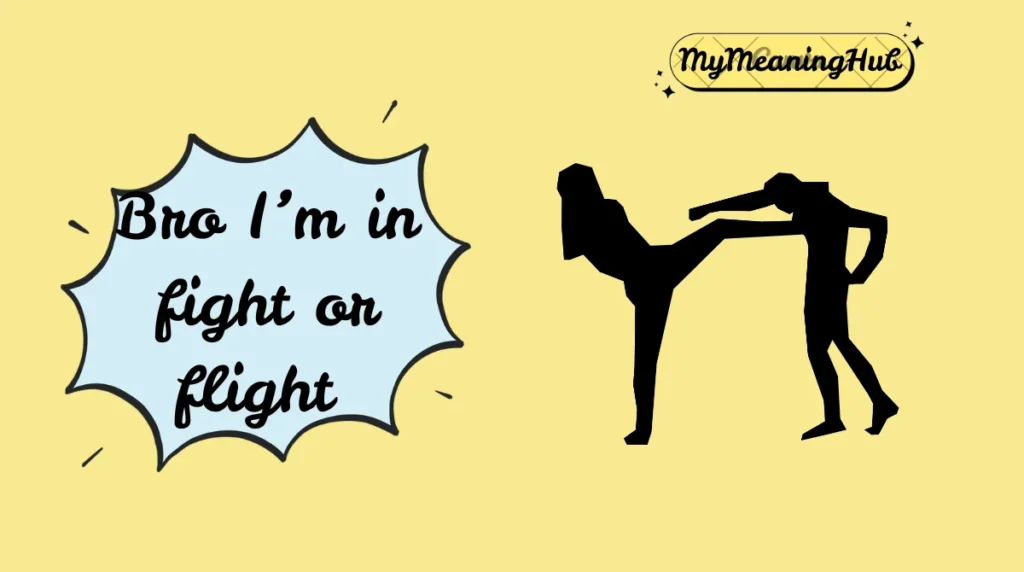
Fight or flight is a natural human response to danger or stress.
👉 It’s your body’s automatic survival system to protect you.
fight or flight = your body prepares to either face the problem (fight) or run away from it (flight)
Ever seen someone say “I’m in fight or flight mode rn 😭” and wondered what they really mean?
You’re not alone.
In today’s fast-paced texting and social media culture, phrases like “fight or flight” are used way beyond their original scientific meaning.
Understanding this term helps you better read emotions, reactions, and even hidden stress signals in chats.
In this guide, we’ll break down the fight or flight meaning, how it’s used in texting, where it comes from, and how you can use it naturally in your own conversations.
What Does “Fight or Flight” Mean? (Definition & Origin)
The Basic Meaning
Fight or flight refers to a natural human reaction when facing danger, stress, or pressure. It describes two main responses:
- Fight → Confront the situation head-on
- Flight → Avoid or escape the situation
In texting and online slang, it usually means:
👉 Feeling overwhelmed, anxious, or pressured to react quickly
The Scientific Origin
The phrase comes from psychology and biology. It was first described as a survival mechanism where the body releases adrenaline in stressful situations.
When triggered, your body:
- Speeds up your heart rate
- Sharpens focus
- Prepares muscles for action
💡 In modern usage, this reaction doesn’t just happen in danger—it can happen during:
- Exams
- Arguments
- Awkward social situations
- Even replying to a risky text 😅
Modern Slang Meaning
In texting/chat culture, fight or flight has evolved into a relatable expression for:
- Panic or anxiety
- Social pressure
- Overthinking a situation
- Not knowing how to respond
📱 Example:
“She just said ‘we need to talk’… I’m in full fight or flight mode 💀”
How to Use “Fight or Flight” in Texts or Chat
Using this phrase is simple, but context matters. It’s mostly used casually, humorously, or emotionally.
Common Situations Where It’s Used
You’ll often see fight or flight in:
- WhatsApp chats
- Instagram DMs
- TikTok captions
- Twitter/X posts
- Gaming chats
- Reddit threads
How to Use It Naturally
Here are some easy ways to use it:
1. Expressing Anxiety or Panic
- “Bro I just saw my crush… fight or flight activated 😭”
- “Teacher asked me a question randomly—fight or flight mode ON”
2. Reacting to Awkward Situations
- “When you wave back at someone who wasn’t waving at you… fight or flight”
3. Overthinking Messages
- “He left me on read… now I’m in fight or flight deciding whether to double text”
4. Funny/Relatable Content
- “When the waiter says ‘enjoy your meal’ and you say ‘you too’… fight or flight 😭”
Pro Tip 💡
Use it:
- Casually with friends
- In memes or jokes
- When describing relatable stress
Avoid using it in:
- Formal emails
- Professional communication
Examples of “Fight or Flight” in Conversations
Let’s look at real-life style conversations so you understand how it flows naturally.
Example 1: Social Anxiety
Friend 1: I just walked into the wrong classroom
Friend 2: 😭😭 what did you do
Friend 1: Nothing… just stood there in fight or flight mode
Example 2: Texting Stress
You: She replied “ok”
Friend: That’s scary
You: I’m literally in fight or flight rn
Example 3: Funny Scenario
Post Caption:
“When your phone autocorrects something embarrassing and you hit send anyway… fight or flight 😭”
Example 4: Gaming Context
Player: Enemy squad spotted
Teammate: Bro I’m in fight or flight 😭
Example 5: Workplace Humor
Coworker: Boss wants to see you
You: Why does that put me in fight or flight instantly
Common Mistakes or Misunderstandings
Even though it’s simple, people sometimes misuse fight or flight. Here are a few common mistakes:
❌ Mistake 1: Using It Too Literally
Some people think it always means physical danger.
✔️ Reality:
In texting, it’s mostly emotional or humorous—not actual danger.
❌ Mistake 2: Using It in Formal Contexts
Example:
“I experienced fight or flight when receiving your email.”
🚫 This sounds awkward and overly dramatic.
✔️ Use instead:
- “I felt stressed”
- “I was under pressure”
❌ Mistake 3: Overusing It
If you use fight or flight in every situation, it loses impact.
✔️ Use it when:
- The situation is genuinely awkward, stressful, or funny
❌ Mistake 4: Confusing It With “Freeze”
In psychology, there’s also a third response:
- Freeze → Not reacting at all
Sometimes people actually mean this but still say fight or flight.
Related Slangs or Abbreviations
To sound more natural in texting, here are similar slang terms and expressions:
🔹 1. “Anxiety Mode”
- “I’m in anxiety mode rn before the interview”
🔹 2. “Panic Mode”
- “Deadline is tomorrow… panic mode activated”
🔹 3. “Overthinking”
- “I’m overthinking that message so hard”
🔹 4. “Stressin’”
- “I’m stressin’ over this test”
🔹 5. “Triggered”
- Used jokingly:
- “That sound triggered my fight or flight”
🔹 6. “Lowkey Freaking Out”
- “I’m lowkey freaking out about this”
🔹 7. “High Alert”
- “My brain is on high alert rn”
💡 Internal Linking Suggestions (for your blog):
- “What Does ‘SMH’ Mean in Text?”
- “What Does ‘IMO’ Mean in Chat?”
- “What Does ‘BRB’ Mean?”
- “Overthinking Meaning in Texting”
Why “Fight or Flight” Is Trending in 2026
This phrase has become more popular recently due to:
📱 Social Media Culture
Short-form platforms like TikTok and memes made it relatable and viral.
🧠 Mental Health Awareness
People now openly talk about:
- Anxiety
- Stress
- Emotional reactions
😂 Meme Potential
It perfectly describes awkward everyday situations, making it highly shareable.
Trending Example (2026 Style)
“When your phone connects to the car Bluetooth and plays your music out loud… fight or flight 💀”
When Should You Use “Fight or Flight”?
Use this phrase when:
✔️ You feel:
- Nervous
- Pressured
- Awkward
- Overwhelmed
✔️ You want to:
- Be relatable
- Add humor
- Express emotion quickly
When NOT to Use It
Avoid using it:
- In professional emails
- In serious mental health discussions (unless used correctly)
- In formal writing
Practical Tips for Using It Correctly
Here are quick tips:
- ✅ Keep it casual
- ✅ Pair it with emojis (😭💀😅)
- ✅ Use it in relatable situations
- ❌ Don’t overuse it
- ❌ Don’t use in formal settings
People Also Ask (FAQs)
#### What does fight or flight mean in texting?
It means feeling anxious, pressured, or unsure how to react in a situation, often used humorously or casually in chats.
#### Is fight or flight a slang term?
Originally, it’s a psychological term, but it has become popular slang in texting and social media.
#### Can I use fight or flight in a formal message?
No, it’s best used in casual conversations. In formal settings, use words like “stress” or “pressure.”
#### What triggers fight or flight in texting?
Things like awkward messages, sudden questions, or emotional situations can trigger it.
#### Does fight or flight always mean fear?
Not always. In texting, it can also mean confusion, awkwardness, or social anxiety.
#### Is fight or flight a meme?
Yes! It’s widely used in memes to describe funny or relatable stressful moments.
#### What’s the difference between fight, flight, and freeze?
- Fight → Confront
- Flight → Escape
- Freeze → Do nothing
#### Why do people say fight or flight online?
Because it quickly expresses emotional stress or panic in a relatable and humorous way.
Conclusion
The fight or flight meaning has evolved from a scientific survival response into a widely used expression in texting and online culture.
Today, it’s a fun, relatable way to describe moments of stress, awkwardness, or emotional pressure.
Whether you’re reacting to a risky text, an unexpected situation, or just a funny moment, using fight or flight can make your messages feel more expressive and human.
Just remember to keep it casual and use it in the right context.
As digital conversations continue to evolve in 2026, understanding phrases like this helps you stay connected, relatable, and fluent in modern slang.