Understanding curriculum vitae meaning is essential in today’s digital world, especially when communicating in job-related chats, emails, and professional platforms.
Even though it’s not a slang abbreviation like “LOL” or “BRB,” the term CV (Curriculum Vitae) frequently appears in texting between recruiters, hiring managers, and job seekers.
In 2026, remote work, online hiring, and AI-based recruitment systems have made CV-related communication more common than ever.
Whether you’re chatting on WhatsApp with a recruiter or submitting documents via LinkedIn, knowing exactly what CV means can help you respond confidently and professionally.
What Does Curriculum Vitae Meaning? (Definition & Origin)
What is a Curriculum Vitae (CV)?
The curriculum vitae meaning refers to a detailed document that outlines your academic background, work experience, skills, achievements, and professional qualifications.
Simply put:
- A CV = your complete professional life story
- It is more detailed than a resume
- Commonly used in academic, research, and international job applications
A CV typically includes:
- Educational history
- Work experience (full details)
- Publications or research (if any)
- Skills and certifications
- Awards and achievements
- Professional references
Origin of the Term “Curriculum Vitae”
The phrase “curriculum vitae” comes from Latin:
- Curriculum = “course”
- Vitae = “of life”
So, the literal curriculum vitae meaning is “course of life.”
Over time, it became a standard global term used in hiring processes, especially in Europe, Asia, and academic institutions.
CV vs Resume: Key Difference (Important in 2026)
Many people confuse CV with resume, but they are not the same:
- CV (Curriculum Vitae): Long, detailed document (2–10+ pages)
- Resume: Short summary (1–2 pages)
In modern hiring chats like:
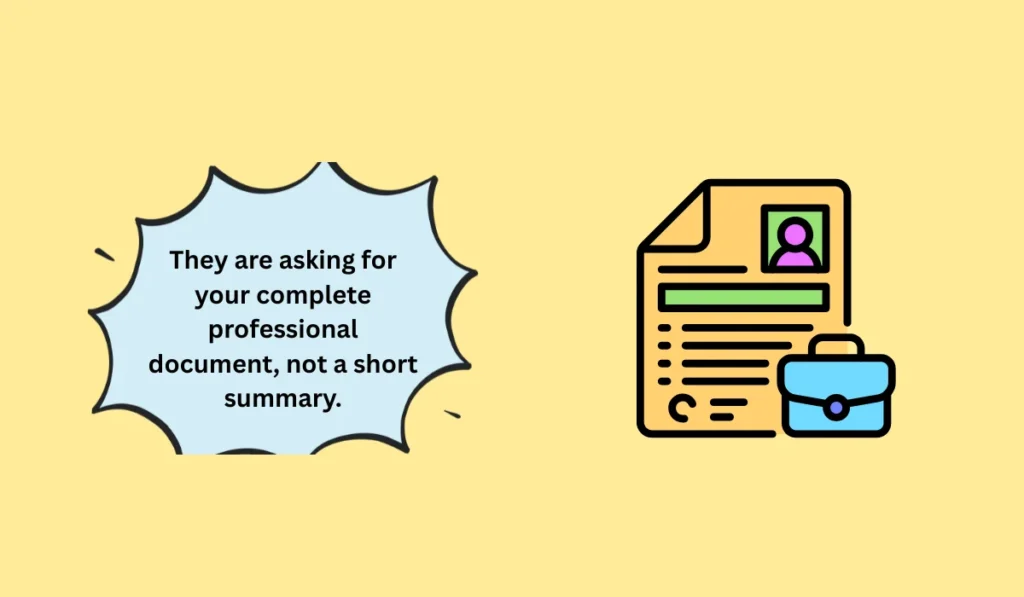
“Please send your CV on email/WhatsApp”
They are asking for your complete professional document, not a short summary.
How to Use Curriculum Vitae in Texts or Chat
Even though curriculum vitae meaning is formal, the term is widely used in digital communication today.
Where You Might See “CV” in Chats
You will often encounter CV-related messages in:
- Job application WhatsApp chats
- LinkedIn recruiter messages
- Freelance job platforms
- Email conversations with HR
- University admission discussions
How People Commonly Use It in Texting
Here are typical real-world chat examples:
- “Hi, please send your CV for review.”
- “Can you update your CV and resend it?”
- “We liked your profile. Share your CV on email.”
- “Is your CV updated for 2026 roles?”
Even though it’s not slang, CV behaves like a shorthand in communication.
Pro Tip for 2026 Job Seekers
Recruiters now expect:
- ATS-friendly CV formats
- Keyword-optimized CVs
- PDF format (not Word in most cases)
So when someone asks for your CV in chat, they usually want a ready-to-send professional file, not a rough draft.
Examples of Curriculum Vitae in Conversations
Let’s understand curriculum vitae meaning with realistic chat scenarios.
Example 1: Recruiter Chat
Recruiter:
“Hello, are you available for a marketing role?”
Candidate:
“Yes, I am. Should I send my CV?”
Example 2: WhatsApp Job Group
“Urgent hiring in Dubai. Send your CV to HR before 5 PM.”
Example 3: Freelance Platform
“Please upload your CV along with portfolio for verification.”
Example 4: University Admission Chat
“Submit your CV and academic transcripts for review.”
These examples show how CV is used as a quick reference in modern communication.
Common Mistakes or Misunderstandings
Even though the curriculum vitae meaning seems simple, many people still misuse it.
1. Confusing CV with Resume
- CV = full professional history
- Resume = short summary
Mistake: Sending a 1-page resume when CV is requested.
2. Sending Outdated CVs
Many applicants forget to update:
- Latest job roles
- New skills
- Certifications
Recruiters in 2026 expect updated, keyword-rich CVs.
3. Overloading Information
A CV should be detailed, but not messy:
- Avoid irrelevant personal details
- Do not include outdated hobbies
- Keep structure clean and readable
4. Using Wrong File Formats
- ❌ Sending images of CV
- ❌ Sending uneditable screenshots
- ✅ Use PDF format (preferred)
5. Ignoring ATS Optimization
Modern companies use ATS (Applicant Tracking Systems), so CVs must include:
- Relevant keywords
- Clear headings
- Standard formatting
Related Slangs or Abbreviations
While curriculum vitae meaning is formal, it is often used alongside other job-related abbreviations in chats:
Common Related Terms
- CV = Curriculum Vitae
- Resume = Short job summary document
- HR = Human Resources
- JD = Job Description
- FT/PT = Full-time / Part-time
- WFH = Work From Home
- ATS = Applicant Tracking System
These terms frequently appear together in recruitment chats.
How CV Is Used in 2026 Digital Communication
In 2026, CV sharing has become faster and more digital:
- WhatsApp CV submissions are common
- LinkedIn “Easy Apply” uses CV uploads
- AI recruiters scan CVs instantly
- Video CVs are emerging in creative industries
So understanding curriculum vitae meaning is more important than ever for job seekers and professionals.
FAQs About Curriculum Vitae Meaning
1. What is the simple meaning of CV?
CV stands for Curriculum Vitae, meaning a detailed document of your education, skills, and work experience.
2. Is CV the same as resume?
No. A CV is longer and more detailed, while a resume is short and concise.
3. Why do employers ask for a CV?
Employers use CVs to evaluate your complete professional background and suitability for a role.
4. Can I send the same CV for all jobs?
It’s better to customize your CV according to each job description for better results.
5. What format should a CV be in 2026?
Most employers prefer PDF format because it preserves layout and is ATS-friendly.
6. Is CV used in texting slang?
Not exactly slang, but CV is commonly used as shorthand in job-related chats and messages.
7. How long should a CV be?
A CV can be 2–10 pages depending on experience, academic background, and achievements.
8. What should not be included in a CV?
Avoid irrelevant personal details, outdated information, and unprofessional content.
Conclusion
The curriculum vitae meaning goes beyond just a document—it represents your professional identity.
In today’s digital job market, CVs are essential tools used in chats, emails, and recruitment platforms worldwide.
Understanding how to use and respond to CV-related requests can significantly improve your chances of landing job opportunities.