In today’s fast-moving digital world, new slang, expressions, and internet phrases appear constantly.
While some terms are obvious, others can leave people confused when they pop up in text messages, social media comments, or online conversations.
One phrase that often sparks curiosity is “glassy eyes.”
So, what exactly does glassy eyes mean?
The phrase is commonly used to describe someone whose eyes appear unfocused, shiny, blank, tired, emotional, or disconnected from what’s happening around them.
Depending on the context, it can indicate exhaustion, sadness, boredom, daydreaming, illness, intoxication, or even being deeply in love.
Understanding the meaning of glassy eyes can help you interpret messages, social media posts, memes, and everyday conversations more accurately.
Updated for 2026, this guide explains everything you need to know about the phrase, including its meaning, origin, usage examples, common misunderstandings, and related slang terms.
What Does “Glassy Eyes” Mean?
The term glassy eyes refers to eyes that look shiny, unfocused, distant, or lacking normal expression.
Simple Definition
When someone says a person has glassy eyes, they usually mean:
- Their eyes appear blank or unfocused.
- They seem emotionally distant.
- They look exhausted or sleepy.
- They may be overwhelmed by emotions.
- They appear lost in thought.
The phrase can be used literally to describe someone’s physical appearance or figuratively to describe their mental or emotional state.
Example
“After studying for twelve hours straight, I had completely glassy eyes.”
In this case, the person is describing extreme tiredness.
Origin of the Phrase
Unlike many modern internet abbreviations, glassy eyes is not a recent slang term. It has existed in English for decades and originally described eyes that resembled glass—shiny, reflective, and expressionless.
Over time, the phrase became popular in:
- Everyday speech
- Literature
- Movies and TV shows
- Social media posts
- Text messaging
- Internet memes
Today, it remains widely used both online and offline.
How Is Glassy Eyes Used in Texting and Chat?
In digital conversations, glassy eyes is often used to describe a feeling, mood, or reaction.
Instead of explaining an entire emotional state, people use the phrase as shorthand to paint a vivid picture.
Common Situations
People often use glassy eyes when talking about:
- Lack of sleep
- Emotional moments
- Long work sessions
- Endless meetings
- Binge-watching shows
- Intense studying
- Feeling overwhelmed
- Daydreaming
Text Example
Friend 1: “How was your overnight shift?”
Friend 2: “Terrible. I’m sitting here with glassy eyes and three cups of coffee.”
The phrase immediately communicates exhaustion.
Social Media Example
“Finished my final exams. Currently staring at the wall with glassy eyes.”
This use humorously shows mental exhaustion.
Different Meanings of Glassy Eyes Depending on Context
One reason the phrase can be confusing is that its meaning changes depending on the situation.
Glassy Eyes from Exhaustion
This is one of the most common meanings.
Example:
“I’ve been awake for 24 hours. My eyes are completely glassy.”
Meaning: The person is extremely tired.
Glassy Eyes from Sadness
Sometimes people become emotional and their eyes appear shiny or distant.
Example:
“She had glassy eyes after hearing the news.”
Meaning: She was likely emotional or close to tears.
Glassy Eyes from Boredom
People also use the phrase to describe someone who looks mentally checked out.
Example:
“Everyone in the meeting had glassy eyes by hour three.”
Meaning: The meeting was boring.
Glassy Eyes from Daydreaming
Someone lost in thought may appear disconnected.
Example:
“Why are you staring out the window with glassy eyes?”
Meaning: The person is daydreaming.
Glassy Eyes from Attraction
In some romantic contexts, glassy eyes can suggest admiration or infatuation.
Example:
“He gets glassy eyes whenever she walks into the room.”
Meaning: He is deeply attracted to her.
Examples of Glassy Eyes in Conversations
Here are realistic examples showing how people use the phrase.
Example 1: Student Life
Sarah: “Did you finish the assignment?”
Mike: “Yeah, but I have glassy eyes from staring at my laptop all night.”
Example 2: Workplace Chat
Employee: “That meeting could’ve been an email.”
Coworker: “Seriously. Half the room had glassy eyes.”
Example 3: Emotional Situation
Friend: “How’s your grandmother doing?”
Person: “Not great. My mom had glassy eyes after talking to the doctor.”
Example 4: Gaming Session
Player 1: “You’ve been online all day.”
Player 2: “I know. I’ve got glassy eyes and zero regrets.”
Example 5: Streaming Marathon
Friend: “Did you finish the whole season?”
Viewer: “Yes. My glassy eyes are proof.”
Why People Use the Phrase Glassy Eyes
The phrase remains popular because it instantly creates a visual image.
Instead of saying:
“I am tired, emotionally drained, unfocused, and mentally exhausted.”
People simply say:
“I have glassy eyes.”
This makes communication:
- Faster
- More expressive
- More relatable
- More memorable
It also works well in memes, captions, and short-form content.
Common Mistakes and Misunderstandings
Many people misunderstand the phrase because it can have multiple meanings.
Mistake #1: Assuming It Always Means Crying
Not necessarily.
Glassy eyes can indicate:
- Tiredness
- Boredom
- Illness
- Daydreaming
- Emotional reactions
Not just tears.
Mistake #2: Thinking It’s Only Internet Slang
Although commonly seen online, the phrase existed long before social media.
It is a standard English expression.
Mistake #3: Assuming It Means Someone Is Sick
While illness can cause glassy eyes, the phrase doesn’t automatically imply a medical condition.
Context matters.
Mistake #4: Taking It Literally Every Time
Sometimes people use the phrase metaphorically.
Example:
“My eyes turned glassy after reading that 200-page report.”
The speaker is emphasizing boredom or exhaustion.
Related Slang and Expressions
If you’re learning internet language and conversational English, you’ll often encounter similar expressions.
1. Zoned Out
Meaning:
Not paying attention or mentally absent.
Example:
“Sorry, I was completely zoned out.”
2. Spaced Out
Meaning:
Distracted or lost in thought.
Example:
“You look spaced out today.”
3. Dead Tired
Meaning:
Extremely exhausted.
Example:
“I’m dead tired after work.”
4. Brain Fog
Meaning:
Difficulty concentrating.
Example:
“I have serious brain fog this morning.”
5. Burned Out
Meaning:
Mentally and physically exhausted.
Example:
“I’ve been feeling burned out lately.”
6. Emotionally Drained
Meaning:
Exhausted from emotional stress.
Example:
“That conversation left me emotionally drained.”
7. In a Daze
Meaning:
Confused or mentally disconnected.
Example:
“I’ve been in a daze all day.”
Where You’ll Commonly See Glassy Eyes Online
The phrase appears across many digital platforms.
Social Media
Popular on:
- Instagram captions
- TikTok comments
- X posts
- Facebook updates
Example:
“Three hours of sleep and glassy eyes. Ready for work.”
Gaming Communities
Gamers often joke about marathon sessions.
Example:
“Eight-hour gaming session = glassy eyes unlocked.”
Student Forums
Students frequently use the phrase during exam season.
Example:
“Finals week has everyone walking around with glassy eyes.”
Workplace Chats
Professionals use it humorously after long meetings.
Example:
“Monday morning Zoom meetings = glassy eyes.”
How to Use Glassy Eyes Correctly
If you want to sound natural, follow these tips.
Use It When Describing Appearance
✅ Correct:
“She had glassy eyes after staying awake all night.”
Use It to Describe Emotions
✅ Correct:
“He looked at the old photos with glassy eyes.”
Use It Humorously
✅ Correct:
“I’ve watched so many tutorials that I now have permanent glassy eyes.”
Avoid Overusing It
The phrase is effective because it’s descriptive.
Using it repeatedly can make your writing sound repetitive.
Is Glassy Eyes Positive or Negative?
Usually, the phrase carries a slightly negative meaning because it often suggests:
- Fatigue
- Stress
- Emotional overwhelm
- Lack of focus
However, context can make it neutral or even positive.
Positive Example
“He had glassy eyes while talking about his dream project.”
This suggests excitement or admiration.
Negative Example
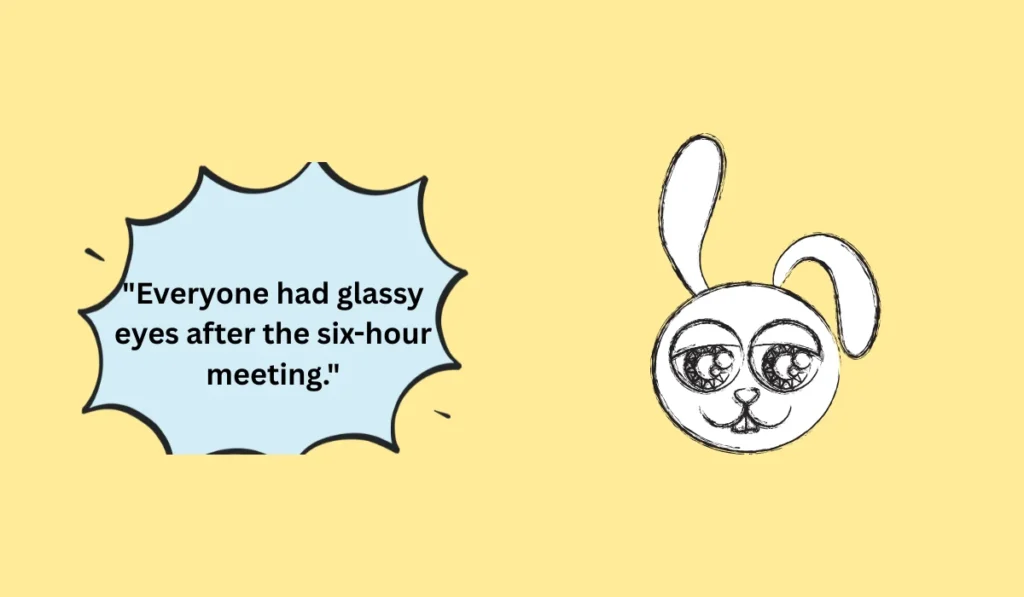
“Everyone had glassy eyes after the six-hour meeting.”
This suggests boredom or exhaustion.
Internal Linking Suggestions
For a slang and texting blog, consider linking to related articles such as:
- What Does “IMO” Mean?
- What Does “TBH” Mean?
- What Does “SMH” Mean?
- What Does “FR” Mean in Text?
- What Does “IDK” Mean?
- What Does “NGL” Mean?
- What Does “IYKYK” Mean?
- What Does “AFK” Mean?
These related terms can improve user engagement and SEO performance.
Frequently Asked Questions (FAQs)
1. What does glassy eyes mean in texting?
It usually means someone looks tired, emotional, distracted, or mentally exhausted.
2. Is glassy eyes considered slang?
Not exactly. It’s a common English expression that is frequently used online and in everyday speech.
3. Can glassy eyes mean sadness?
Yes. The phrase is often used when someone is emotional or close to tears.
4. Does glassy eyes always mean tiredness?
No. It can also indicate boredom, illness, attraction, daydreaming, or emotional overwhelm.
5. Is glassy eyes a negative phrase?
Usually yes, but context can make it neutral or even positive.
6. Can I use glassy eyes in social media captions?
Absolutely. Many people use it humorously to describe being tired or overwhelmed.
7. What is similar to glassy eyes?
Common alternatives include “zoned out,” “spaced out,” “burned out,” and “in a daze.”
8. Is glassy eyes used by younger generations?
Yes. While not exclusive to Gen Z or Gen Alpha, the phrase remains popular in modern online conversations.
Conclusion
Understanding the glassy eyes meaning is useful because the phrase appears frequently in texting, social media posts, online communities, and everyday conversations.
In most cases, it describes someone who looks tired, emotional, distracted, overwhelmed, or mentally distant.
As language continues evolving in 2026 and beyond, expressions like glassy eyes remain popular because they’re visual, relatable, and easy to understand.